
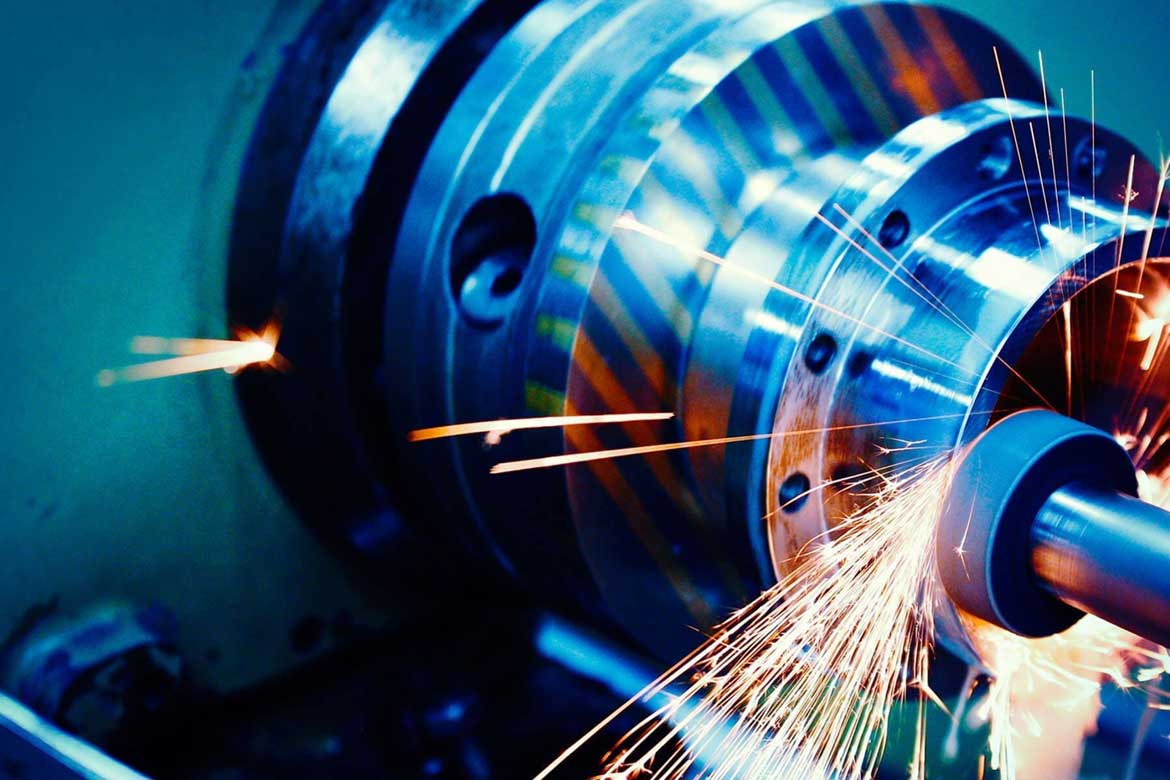
A welding positioner rotates or tilts a workpiece so the joint can be presented in a practical welding orientation. Correct selection begins with the fully fixtured workpiece, its centre of gravity and the movements needed to reach every weld—not only the nominal weight.
Calculate the real positioning load
Include the workpiece, chuck, clamps and fixture. Record the centre-of-gravity distance from the rotation and tilt axes, because an offset load creates a turning moment even when the total mass is below a headline capacity.
- Combined workpiece and fixture mass
- Centre of gravity in each working orientation
- Maximum overhang and swept envelope
- Loading and unloading method
Choose the motion architecture
Rotation-only tables, tilt-and-rotate units, L-type systems, head-and-tail-stock systems and roll-over positioners solve different access and support problems. The positioner types guide compares these configurations without assuming they are interchangeable.
- Number of axes and required orientations
- Manual, automatic or coordinated movement
- Fixture interface and welding-current return path
- Controls, limits, braking and emergency-stop scope
Prepare a useful positioner enquiry
Share drawings, mass, centre of gravity, fixture concept, weld locations and the intended process. Sasha Weldcut can then review an automatic welding positioner or another verified configuration against the application.
- Part drawings and load data
- Required weld positions and speed range
- Robot or manipulator interface, if applicable
- Available space and safe operator access
Buyer questions
Is workpiece weight enough to size a positioner?
No. Fixture weight, centre of gravity, eccentricity and required motion also affect selection.
Can one positioner cover every job?
A positioner should be checked against the worst-case approved workpiece and fixture; different geometries may need different support or motion.
Related machines and technical resources
Technical references
Discuss your application
Share the workpiece, process, production objective, available layout and safety requirements through the technical quote form. Sasha Weldcut will review the requirement before recommending a configuration.


2 Responses
FAQ: How does a welding positioner improve weld quality?
A welding positioner keeps the job at a better welding angle, helping operators maintain consistent travel speed and safer posture. Sasha Weldcut welding positioners are built for practical industrial fabrication needs. For load-capacity selection, call 7418 717 083.